Pay-when-paid vs pay-if-paid, explained
Pay-when-paid sets when a sub is paid; pay-if-paid tries to decide whether. The wording, one illustrative bill, and why it varies by state.
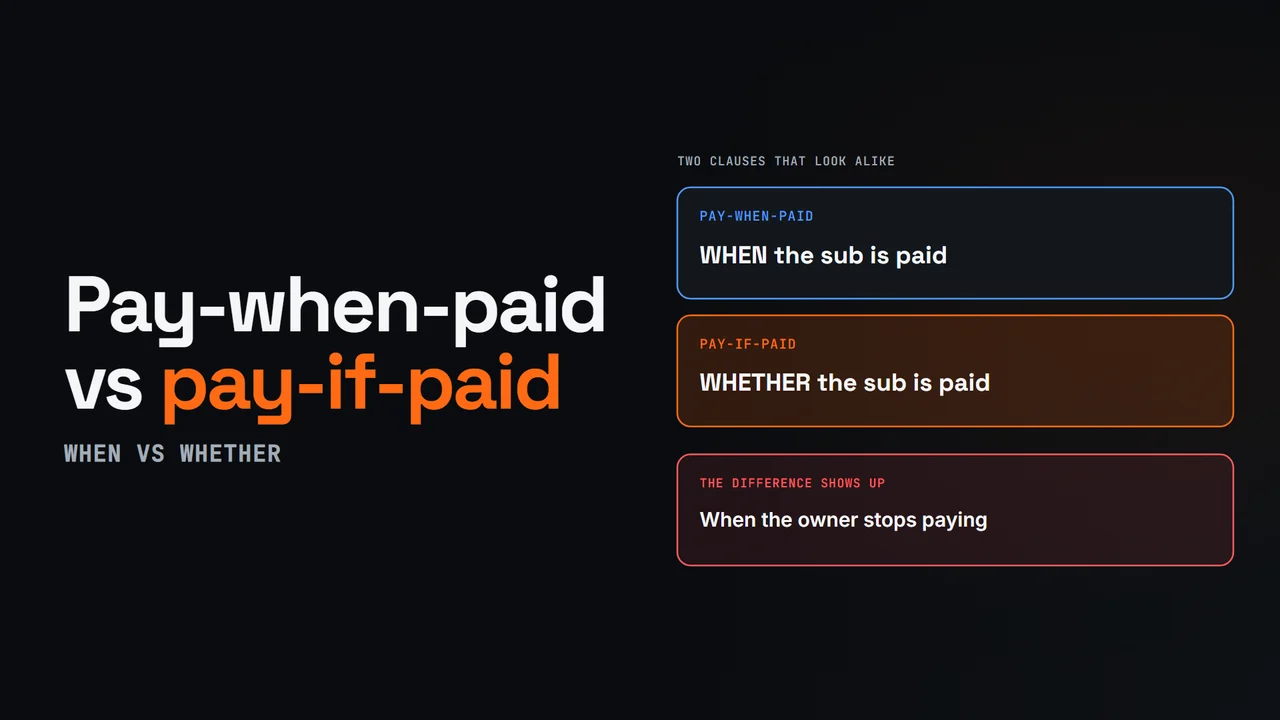
Diagram from this explainer
Chapters
- 0:00 When vs whether
- 0:18 Pay-when-paid: a timing term
- 0:34 Pay-if-paid: a condition
- 0:54 One illustrative bill
- 1:18 Enforceability varies by state
- 1:39 Pay-when-paid in os.construction
Video transcript
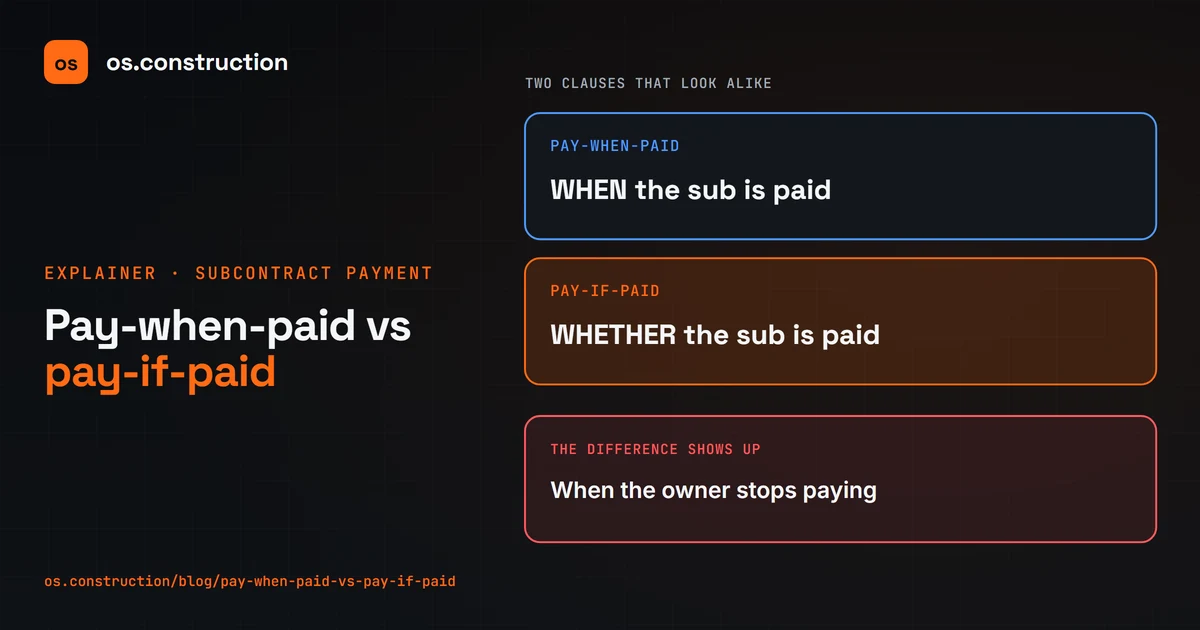
Pay-when-paid and pay-if-paid clauses look almost the same in a subcontract. They answer different questions. Pay-when-paid sets when the sub gets paid. Pay-if-paid tries to decide whether the sub gets paid at all. The difference only shows up when the owner stops paying.
A pay-when-paid clause is a timing term: the general contractor pays within a stated number of days after the owner pays it. It's widely enforced. If the owner never pays, many courts say the GC still has to pay the sub within a reasonable time.
A pay-if-paid clause makes the owner's payment a condition precedent. If the owner never pays, the GC may owe nothing for that work. Courts usually look for clear words, like condition precedent, or that the sub assumes the risk of owner non-payment. Ambiguous clauses are often read as pay-when-paid.
Here's an illustrative case. A drywall sub bills one hundred fifty thousand dollars for March, payable ten days after the GC is paid. If the owner pays late, on May twentieth, the sub is due by May thirtieth either way. If the owner never pays, pay-when-paid in many states still means the sub gets paid after a reasonable time. An enforceable pay-if-paid clause may mean it doesn't.
Enforceability varies by state. Some states enforce a clear pay-if-paid clause, some limit it by statute, and courts in California and New York, among others, have refused to enforce it. Lien and bond rights are often treated separately, and their deadlines keep running. General information, not legal advice.
In os.construction Accounting, payment runs take a bill's pay-when-paid terms into account against the owner payments actually received, and releasing retainage on a pay-when-paid bill also needs the owner's payment.
Your next step
See it on one project record.
Create an account and open the sample project to see contracts, costs, changes and billing on the same record.
Try it in the app