Retainage explained: held, billed and released
How retainage is held on the running total of a pay app, flowed down to subs, reduced at a milestone and released at completion.
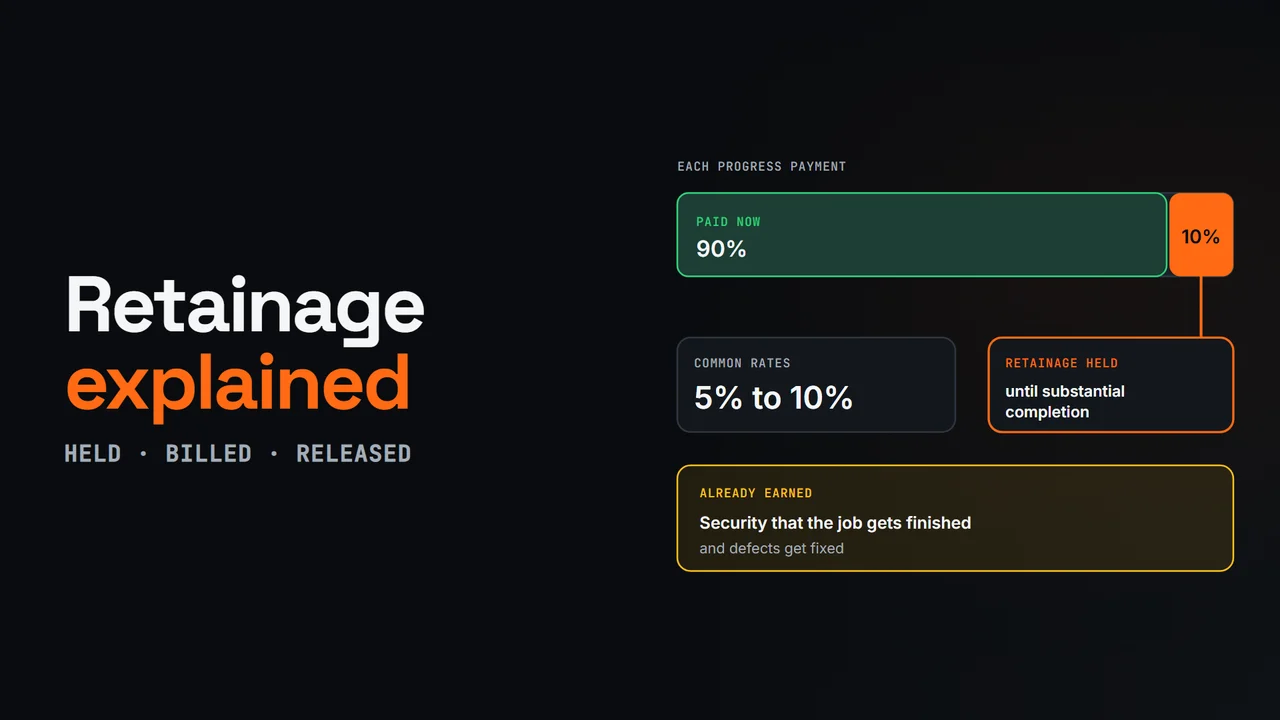
Diagram from this explainer
Chapters
- 0:00 Earned, but held back
- 0:20 How it's held on a pay app
- 0:40 One illustrative pay app
- 1:04 Flow-down and reductions
- 1:26 Release at completion
- 1:47 Retainage in os.construction
Video transcript
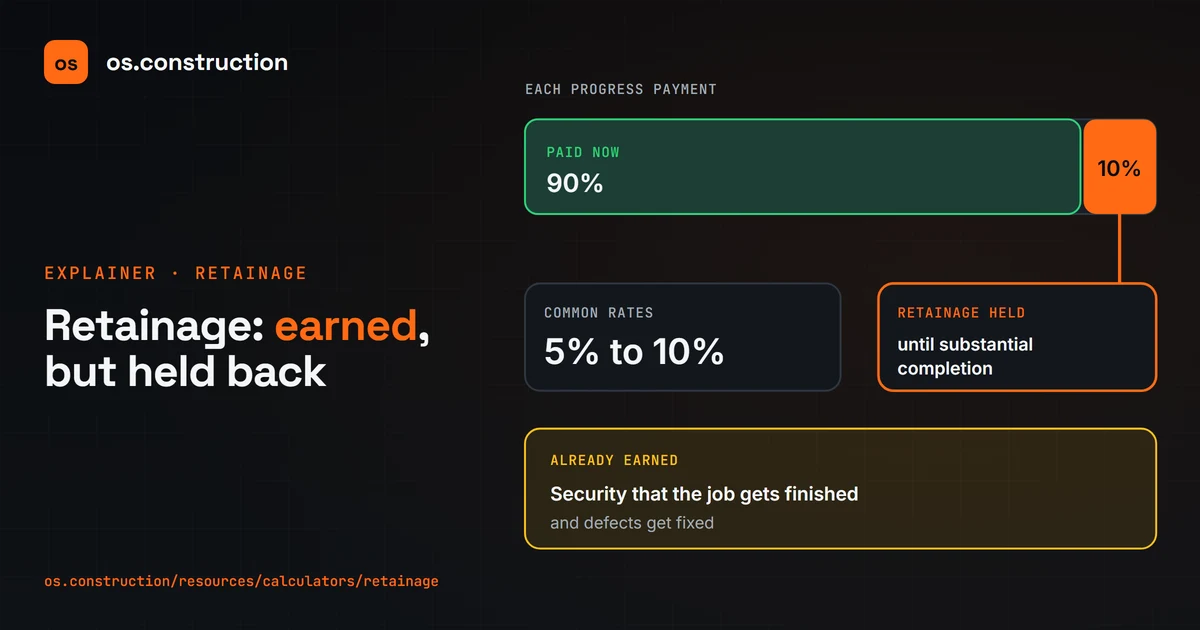
Retainage is the share of each progress payment the owner holds back until the work is substantially complete, commonly five to ten percent. It's money you've already earned, held as security that the job gets finished and defects get fixed. The contract sets the rate, within any limits set by law.
On a pay app, retainage is held on the cumulative amount: work completed to date times the retainage rate, plus stored materials times the stored-materials rate. Payment due is completed and stored, less retainage, less previous certificates. So this period's retainage is the change in that running total.
Here's the sample Riverside job, Pay App number nine. Thirty-three million dollars is completed and stored to date. At ten percent, three point three million is held. Less twenty-seven point six million previously certified, the payment due is about two point oh eight million. This period's two point three one million of work added two hundred thirty-one thousand of retainage.
The GC usually withholds the same rate or more from its subs, so it isn't paying out money it hasn't received. Many contracts drop the rate, say from ten percent to five, once the job is fifty percent complete. Read the contract: it decides whether the lower rate applies only to work after the milestone, or to everything completed.
Release usually comes in a billing at substantial completion, less an amount held for punch list and closeout items. The rest follows at final completion, once closeout documents and final lien waivers are in. Many states cap retainage and set release deadlines, especially on public work. General information, not legal advice.
In os.construction, pay applications calculate retainage on every line, with separate rates for work and stored materials, and record retainage released. Accounting tracks retainage receivable and payable apart from ordinary receivables and payables.
Your next step
See it on one project record.
Create an account and open the sample project to see contracts, costs, changes and billing on the same record.
Try it in the app