Notice to proceed (NTP) explained
What NTP means, what must happen before it is issued, when contract time starts, how a late NTP moves completion, and how a limited NTP differs.
Diagrams from this explainer
Chapters
- 0:00 What NTP means
- 0:21 Paperwork first, then the NTP
- 0:41 What the notice says
- 0:59 When the clock starts
- 1:23 An illustrative contract
- 1:43 NTP on time, site not ready
- 2:04 Limited notice to proceed
- 2:26 Before you mobilize
Video transcript
NTP stands for notice to proceed. It's the owner's written authorization for the contractor to start work under a signed contract. On most jobs, the NTP date starts contract time, the countdown to substantial completion. That one date anchors the schedule, liquidated damages and any time extension claims.
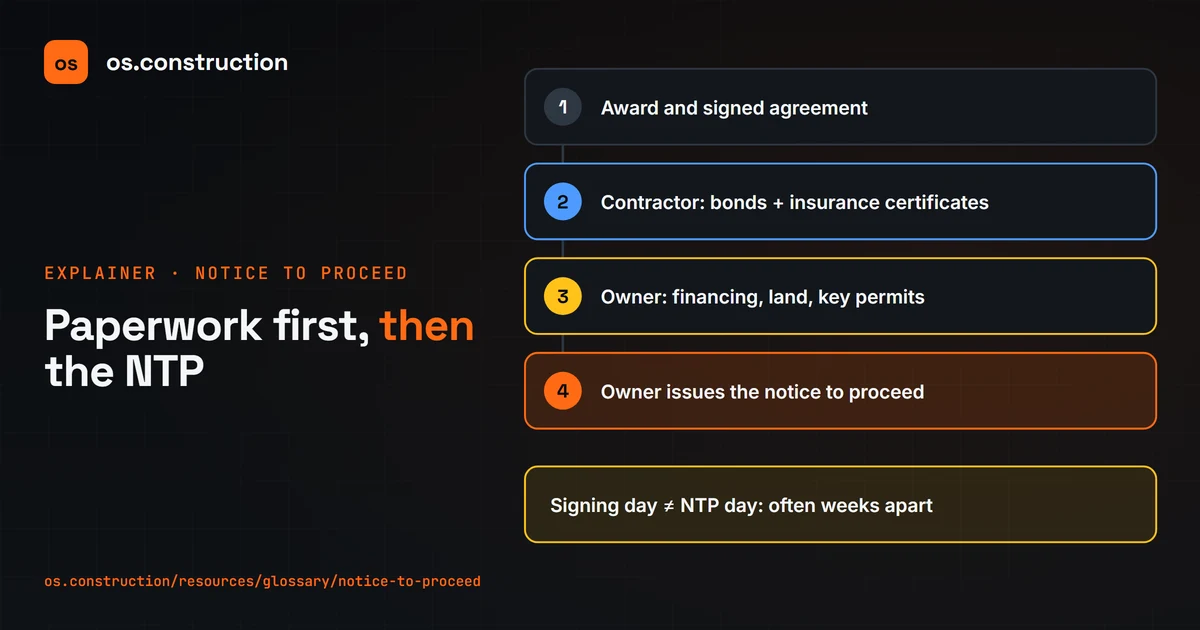
The NTP usually isn't the day the contract is signed. First comes award and the agreement. Then the contractor delivers its performance and payment bonds and certificates of insurance, while the owner lines up financing, land and key permits. Only then does the owner issue the notice to proceed, often weeks after signing.
The notice can be a one-page letter or an agency form. It should name the project and the contract, the date work may begin, the contract time, and the completion dates that result. It must be in writing and signed by someone with authority under the contract.
When does the clock actually start? The contract decides. The standard AIA owner-contractor agreement lets the parties pick the agreement date, a date set in a notice to proceed, or another method. Federal contracts using the FAR commencement clause require work to begin within a stated number of calendar days after the contractor receives the notice.
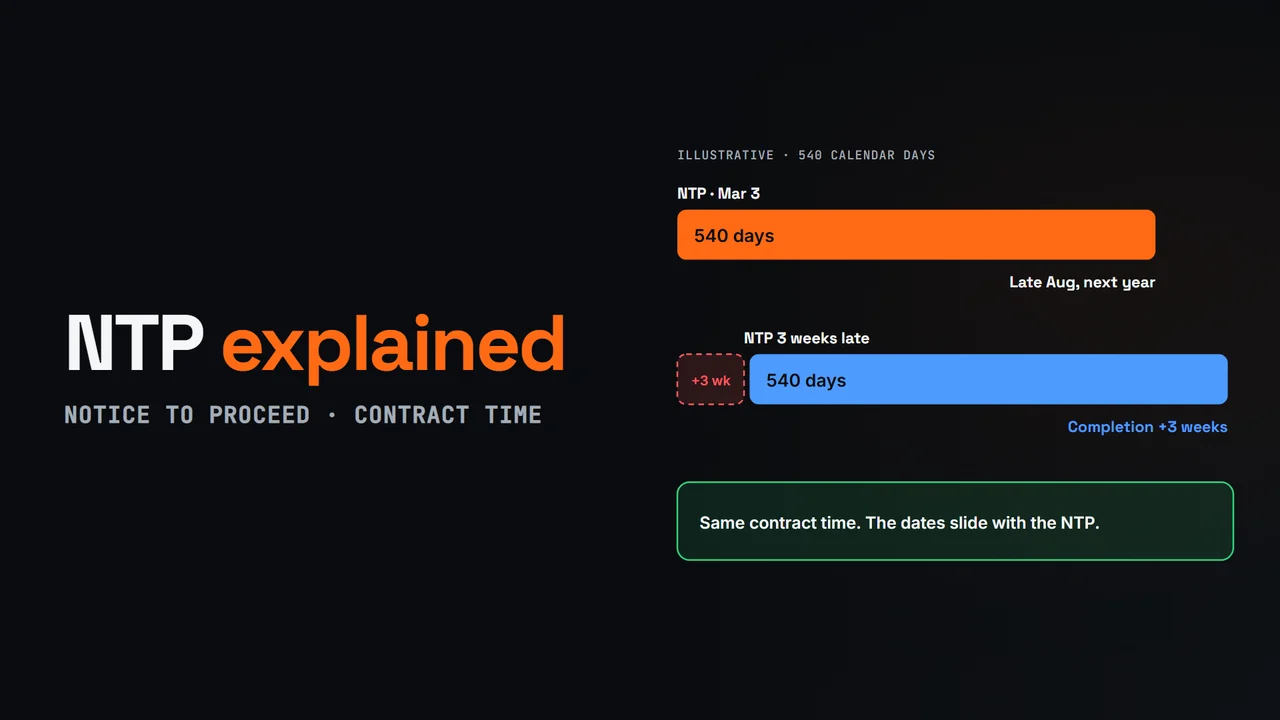
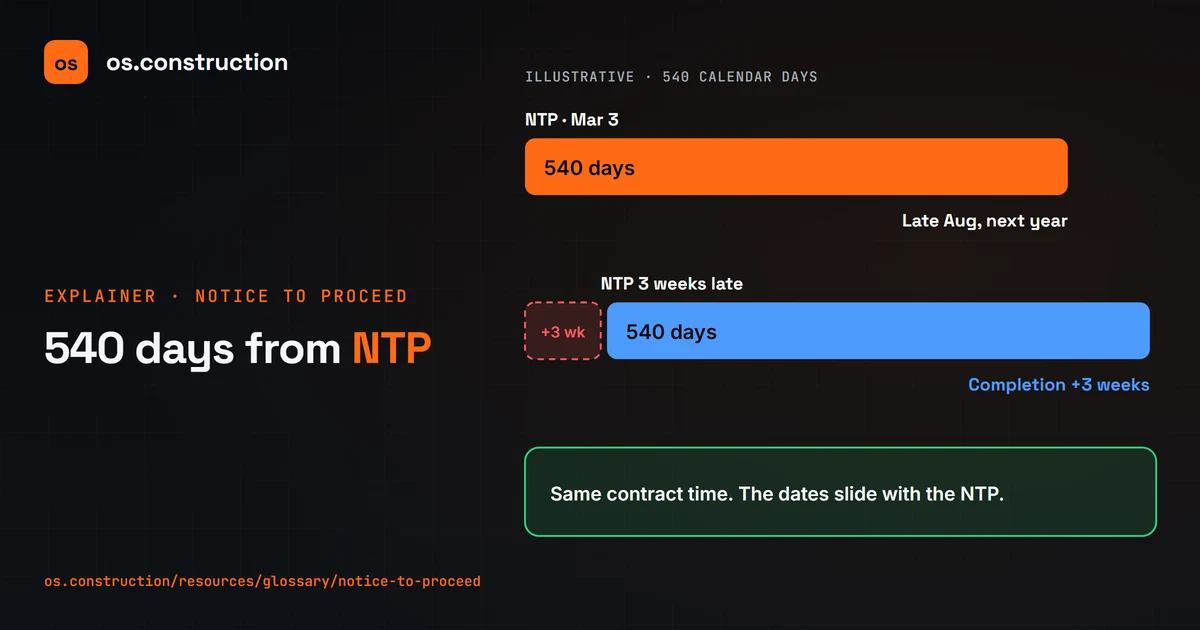
Here's an illustrative contract: five hundred forty calendar days from NTP to substantial completion. The NTP is issued March third, so completion lands in late August of the following year. If the owner issues the NTP three weeks late, the completion date moves three weeks with it.
Now flip it. The NTP goes out on time, but the site isn't available for those three weeks. The clock is running, but the crews can't work. Give written notice right away and request a time extension, which may be compensable depending on the contract. Terms vary by contract; this is general information, not legal advice.
A limited notice to proceed authorizes only named early work, such as design, permitting, mobilization or ordering long-lead equipment, usually with a dollar cap. It usually doesn't start contract time; the full NTP releases everything else. Track spending against the cap, and don't treat a limited NTP as a green light for the whole job.
Before you mobilize, check that the NTP is written and signed, that the commencement date and contract time match the agreement, and that the site and permits are really available. In os.construction Scheduling, the notice to proceed is the planned start of a new schedule, and every date is calculated from it.
Your next step
See it on one project record.
Create an account and open the sample project to see contracts, costs, changes and billing on the same record.
Try it in the app