Mechanics lien deadlines: first vs last furnishing
Why the preliminary notice clock often starts at first furnishing, the lien clock at last furnishing, and enforcement runs on its own deadline.
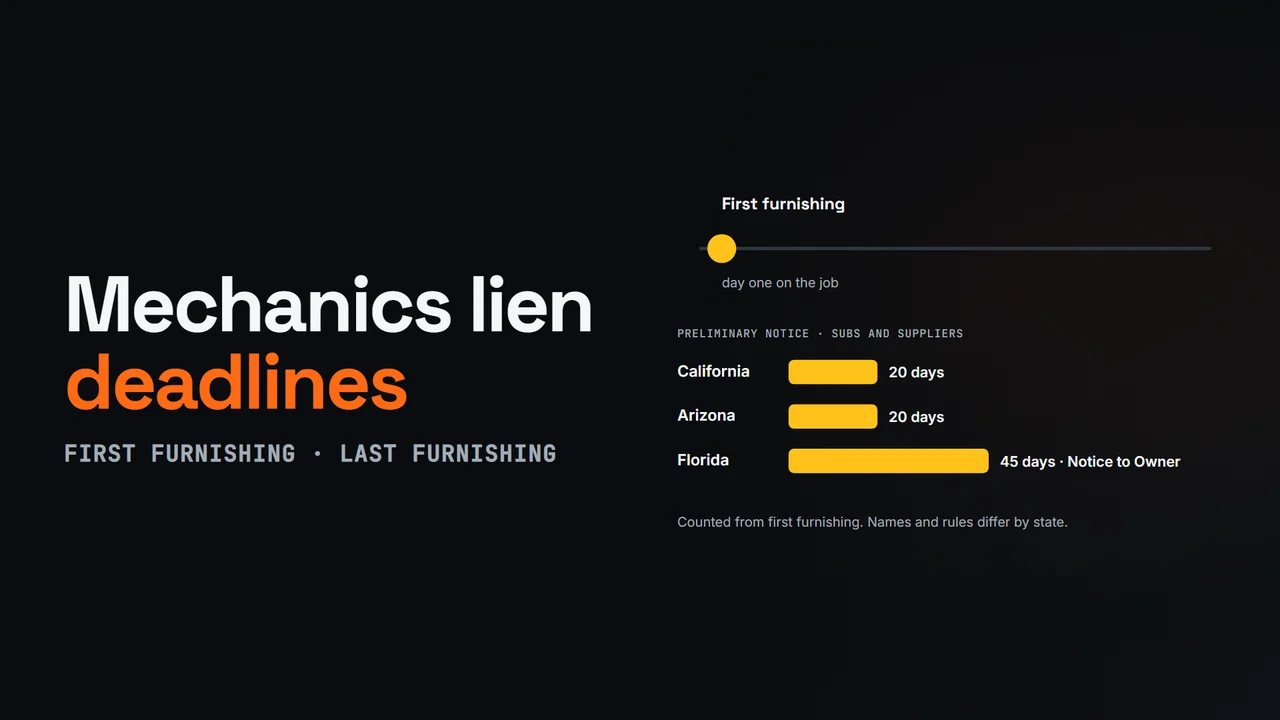
Diagram from this explainer
Chapters
- 0:00 Three deadlines, two start dates
- 0:18 First furnishing starts the notice clock
- 0:38 Why the notice comes so early
- 0:59 Last furnishing starts the lien clock
- 1:17 Then enforce it
- 1:39 Waivers and holds in os.construction
Video transcript
A mechanics lien lets an unpaid contractor, sub or supplier make a claim against the improved property. Keeping that right can mean three deadlines: a preliminary notice, the lien itself, and a lawsuit to enforce it. And they don't all start on the same day.
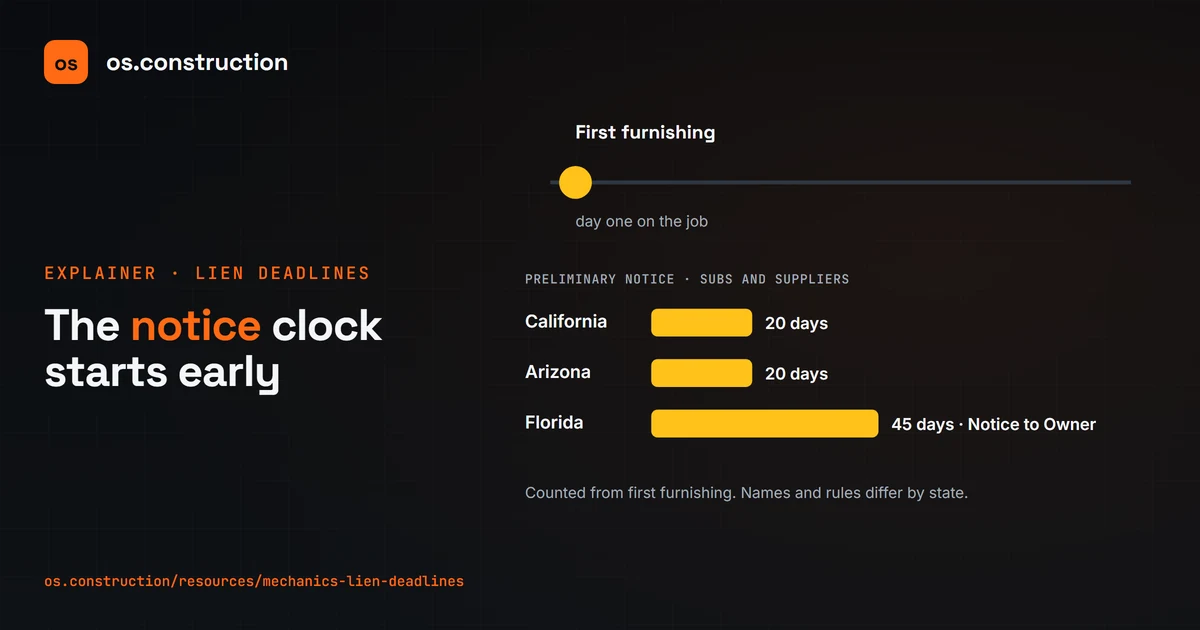
In many states, the notice clock starts at first furnishing: the first day you supply labor or materials to the job. California and Arizona give subs and suppliers twenty days from first furnishing to send a preliminary notice. In Florida, the notice to owner is due within forty-five days after starting to furnish.
Why so early? The notice tells the owner, and often the general contractor and lender, that you're on the job. Miss a required notice and the lien right can be lost or limited, even if you meet every later deadline. In California and Arizona, a late notice covers only work from twenty days before it was served.
The lien deadline is usually counted from your last furnishing, or from completion of the whole project. In Florida, you record within ninety days after your final furnishing. Most states give between about sixty days and six months. Warranty and punch list work often doesn't restart the clock.
Recording isn't the end. The lien expires unless you file suit to enforce it within the state's window. In Florida, that's one year after recording. On public projects you generally can't lien the property; you claim against the payment bond instead. Rules vary by state, and this is general information, not legal advice.
In os.construction, Accounts Payable can hold a bill until the lien waiver it needs is on file, and records conditional and unconditional, progress and final waivers, including from lower tiers. It doesn't calculate or file statutory lien notices, so use the state table and the statute for deadlines.
Your next step
See it on one project record.
Create an account and open the sample project to see contracts, costs, changes and billing on the same record.
Try it in the app