Conditional vs unconditional lien waivers
The four lien waiver types, when to sign each, and one illustrative payment traced from a conditional to an unconditional progress waiver.
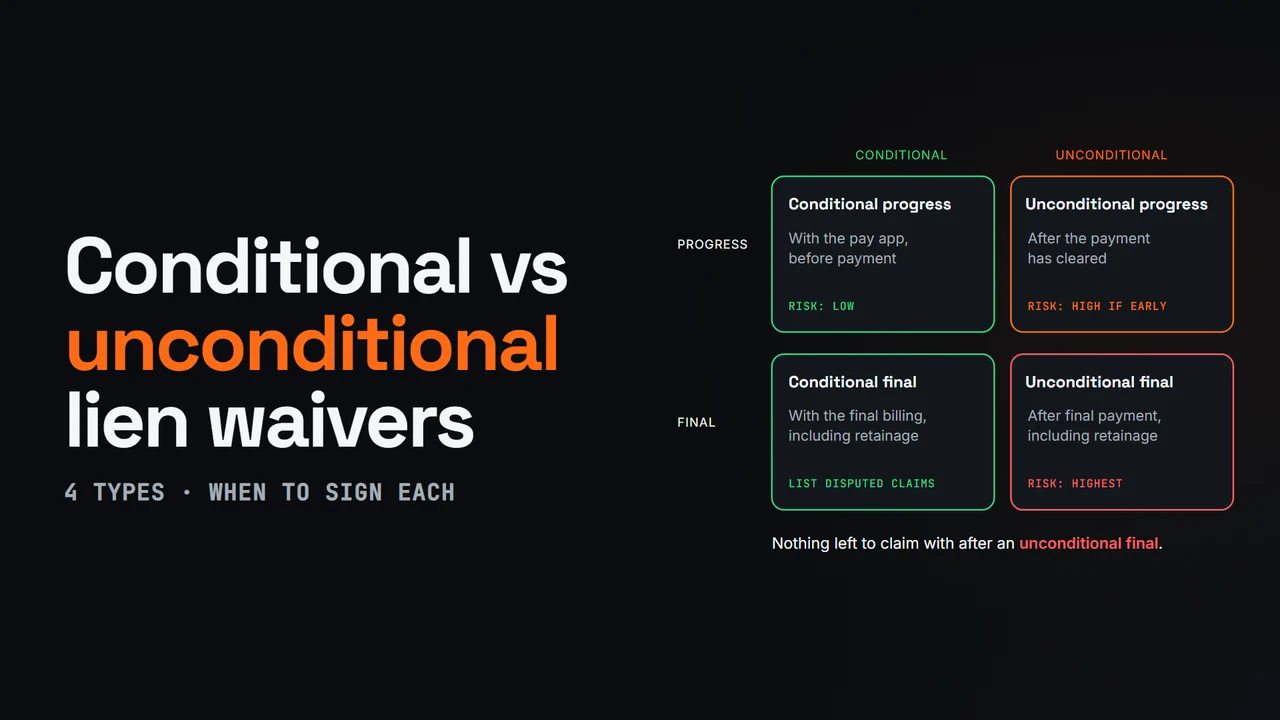
Diagram from this explainer
Chapters
- 0:00 Two questions pick the waiver
- 0:16 Conditional vs unconditional
- 0:38 Progress vs final
- 0:57 One payment, two waivers
- 1:21 State forms and exceptions
- 1:42 Waivers in accounts payable
Video transcript
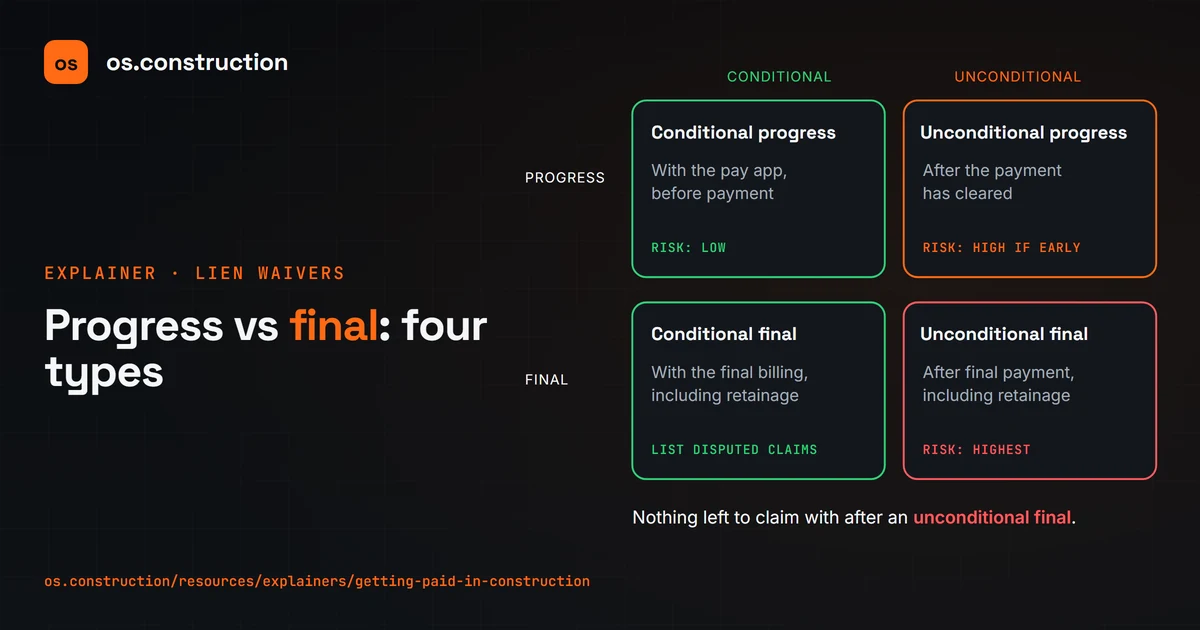
A lien waiver, or lien release, is a signed document that gives up lien rights for a stated amount or period, usually in exchange for payment. Two questions pick the type: has the payment already been received, and is it a progress payment or the final one?
A conditional waiver takes effect only once the stated payment is actually received. If the money never arrives, it's void. An unconditional waiver takes effect the moment it's signed, even if the check later bounces. So the rule is: trade a conditional waiver for a payment, and sign the unconditional only after the money has cleared.
Progress waivers cover work through a stated date, one billing period at a time. Final waivers cover the whole job, including retainage, and go in with the final billing. The unconditional final is the riskiest to sign early: once it's signed, there's nothing left to claim with.
Here's an illustrative month. A sub bills ninety thousand dollars for March, less ten percent retainage, so eighty-one thousand is due. With its pay app, it sends a conditional progress waiver for eighty-one thousand through March thirty-first. When that payment clears, it sends the unconditional for the same amount and date. The nine thousand of retainage is still owed, and it's listed as an exception on both.
California, Texas, Georgia and several other states prescribe the wording, and a waiver that doesn't follow the statutory form may not be enforceable. Elsewhere, a broad waiver can release retainage or pending change orders, so read the exceptions before you sign. General information, not legal advice.
In the os.construction Accounting module, Accounts Payable records all four waiver types, holds a bill when a required waiver is missing, and lets vendors upload waivers through their portal.
Your next step
See it on one project record.
Create an account and open the sample project to see contracts, costs, changes and billing on the same record.
Try it in the app- Next · Construction concepts explainedTCO vs certificate of occupancyWatch the next explainer
- ExplainerGetting paid: pay apps, retainage, lien waivers and stop payment noticesThe full written guide, with worked examples and sources.
- Video libraryMore in Construction concepts explainedEvery video, grouped by topic.