Design-build vs design-bid-build vs CM at risk
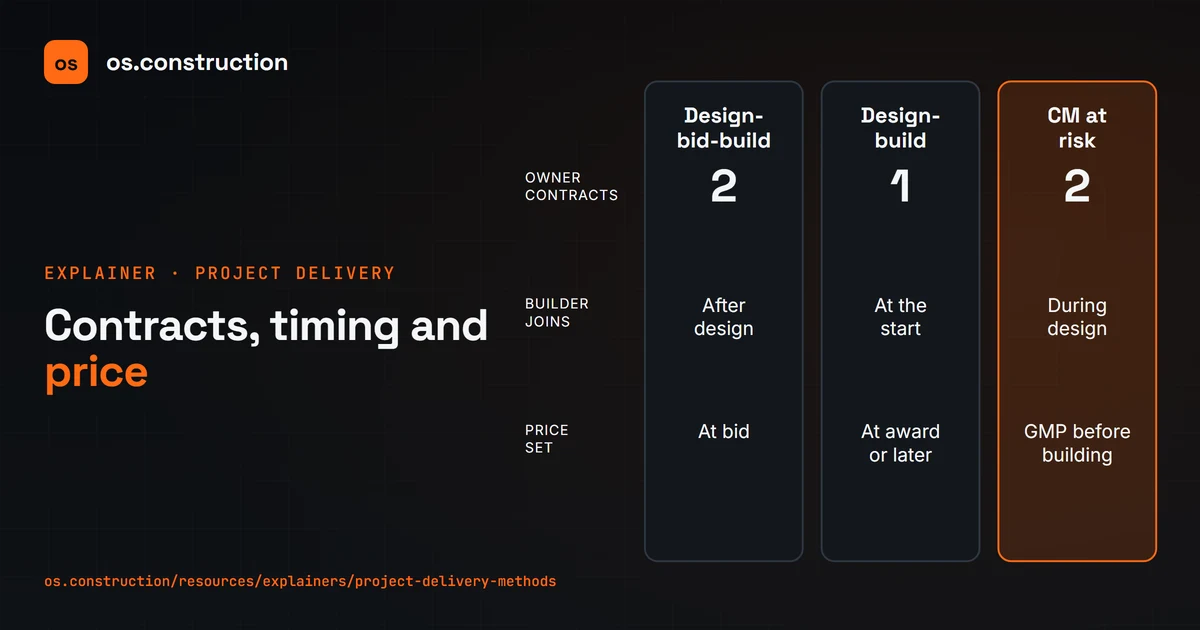
How many contracts the owner signs, when the builder joins and when the price is set, for design-bid-build, design-build and CM at risk.
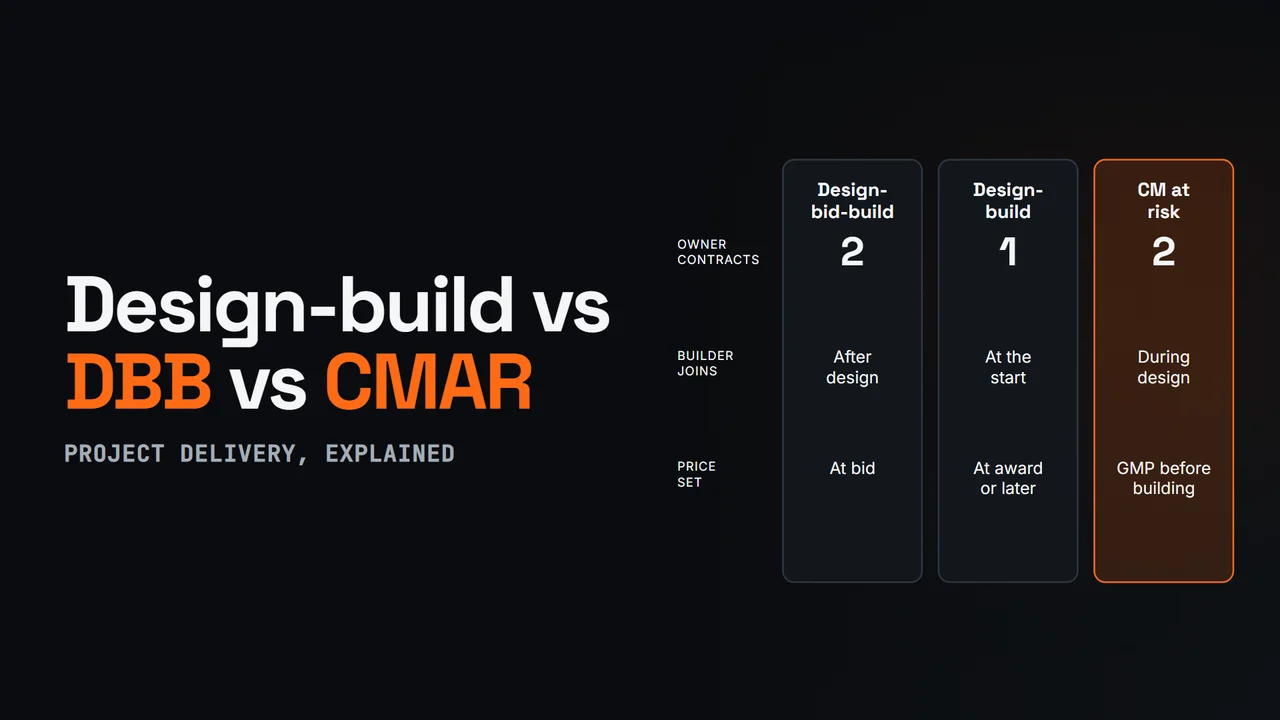
Diagram from this explainer
Chapters
- 0:00 Three ways to buy a building
- 0:12 Design-bid-build
- 0:31 Design-build
- 0:49 CM at risk and the GMP
- 1:14 Side by side
- 1:36 One project record
Video transcript
Design-bid-build, design-build and construction manager at risk are three ways an owner can buy a building. The difference comes down to how many contracts the owner signs, and when the builder gets involved.
Design-bid-build is the traditional sequence. The owner hires an architect, the design is finished, and then contractors bid on it. The low responsive bidder usually wins. The owner holds two separate contracts, so when the drawings have gaps, the owner sits between the designer and the builder.
In design-build, the owner signs one contract with one team that both designs and builds. Design and construction can overlap, which can shorten the schedule, and one party answers for both. The trade-off is less owner control over design details once the criteria are set.
Construction manager at risk keeps the architect on its own contract, but hires the builder early, during design, to advise on cost, schedule and constructability. When the design is far enough along, the construction manager commits to a guaranteed maximum price, or GMP, and then holds the trade contracts. Costs above the GMP are generally the construction manager's risk, unless the scope changes.
So, design-bid-build: two contracts, and a builder picked on price after design. Design-build: one contract for both. CM at risk: two contracts, with the builder in early and a price ceiling set before construction. The right one depends on how much speed, design control and price certainty the owner needs.
Whatever the method, the builder tracks the same things. In os.construction, the prime contract, budget, commitments, change orders and payment applications sit on one project record, so a GMP job and a lump-sum job are run from the same data.
Your next step
See it on one project record.
Create an account and open the sample project to see contracts, costs, changes and billing on the same record.
Try it in the app- Next · Construction concepts explainedBid, performance and payment bonds: who each protectsWatch the next explainer
- ExplainerDesign-build vs design-bid-build vs CM at risk vs IPDThe full written guide, with worked examples and sources.
- Video libraryMore in Construction concepts explainedEvery video, grouped by topic.