Bid, performance and payment bonds: who each protects
The three-party surety bond, then what a bid bond, a performance bond and a payment bond each guarantee, and to whom.
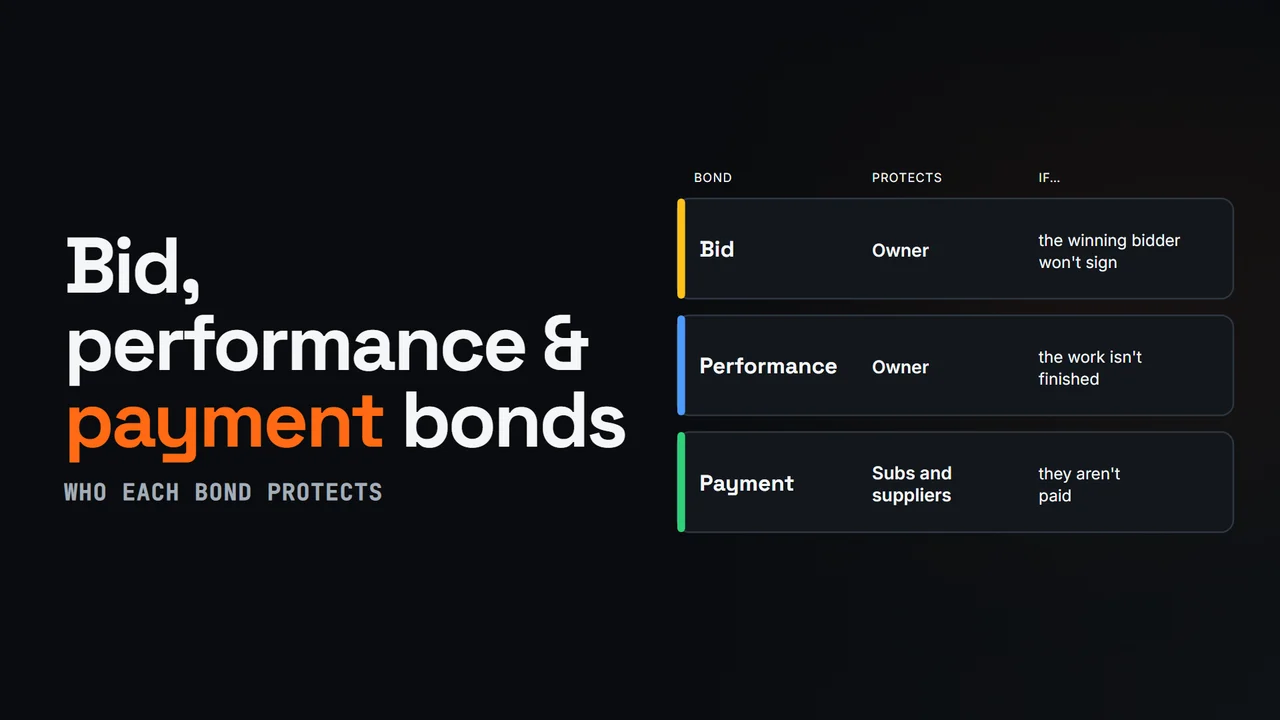
Diagram from this explainer
Chapters
- 0:00 The three parties to a bond
- 0:20 Bid bond
- 0:39 Performance bond
- 0:59 Payment bond
- 1:18 Who each bond protects
- 1:38 The records a surety asks for
Video transcript
Bid bonds, performance bonds and payment bonds often travel together on public work, but each one protects a different promise. Every surety bond has three parties: the contractor, called the principal; the party it protects, called the obligee; and the surety, which guarantees the contractor's promise.
The bid bond comes first. It goes in with the bid and protects the owner if the winning bidder won't sign the contract or provide the required bonds. The amount is set in the bid documents. Five to ten percent of the bid is common on public work, and federal jobs that require one set it higher.
At award, the contractor delivers a performance bond. It protects the owner if the contractor defaults before the work is done. The surety can finance the contractor, bring in a completion contractor or pay the owner's cost to finish, up to the bond amount, which on public work is often the full contract price.
The payment bond protects the subcontractors and suppliers. On public jobs they usually can't put a lien on public property, so the payment bond is how they get paid if the contractor doesn't pay them. The federal Miller Act and state laws, often called Little Miller Acts, set who can claim and the notice deadlines.
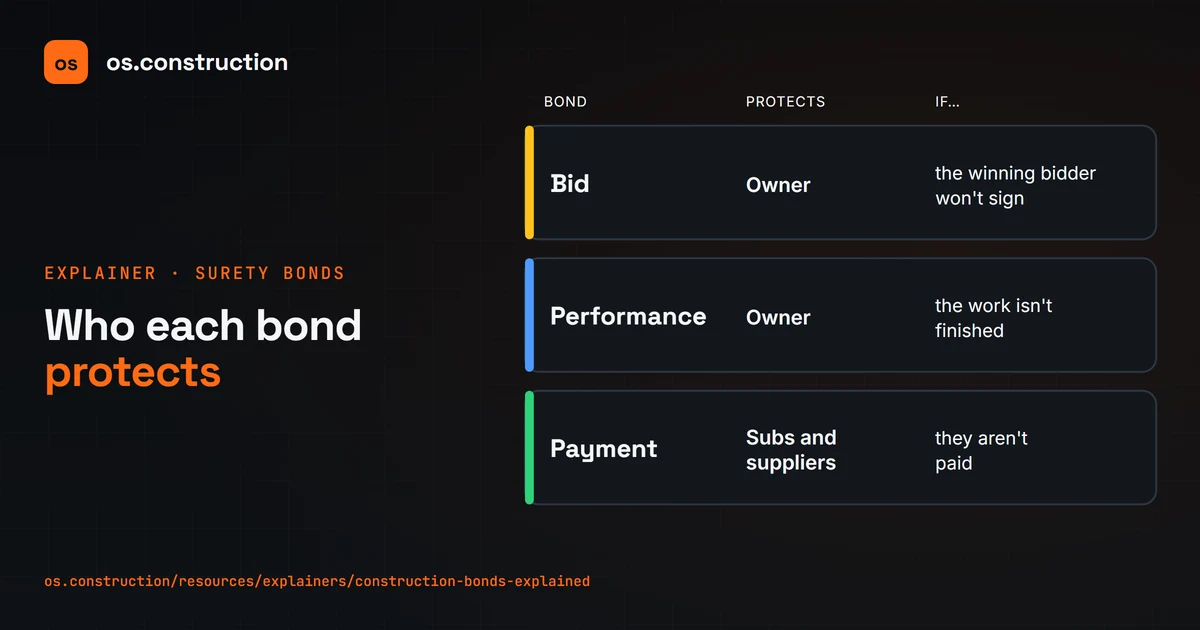
So: the bid bond protects the owner at bid time. The performance bond protects the owner if the work isn't finished. The payment bond protects subs and suppliers if they aren't paid. Amounts and rules vary by state and by contract, and this is general information, not legal advice.
Sureties look closely at how you run jobs and pay subs. In os.construction, commitments, payment applications and change orders sit on the same project record, and prequalification records each vendor's bonding capacity.
Your next step
See it on one project record.
Create an account and open the sample project to see contracts, costs, changes and billing on the same record.
Try it in the app- Next · Construction concepts explainedOver billing vs under billing on a WIP scheduleWatch the next explainer
- ExplainerBid, performance and payment bonds explainedThe full written guide, with worked examples and sources.
- Video libraryMore in Construction concepts explainedEvery video, grouped by topic.