Wrap-up insurance explained: OCIP vs CCIP
How an OCIP or CCIP covers a whole project site, what's usually covered and excluded, why subs take insurance out of their bids, and an illustrative example.
Diagrams from this explainer
Chapters
- 0:00 One program, one site
- 0:17 OCIP vs CCIP
- 0:39 What's usually covered
- 0:59 What's usually left out
- 1:20 Taking insurance out of the bid
- 1:37 Leveling two bids
- 2:01 Enrollment, payroll and safety
- 2:23 A checklist for subs
Video transcript
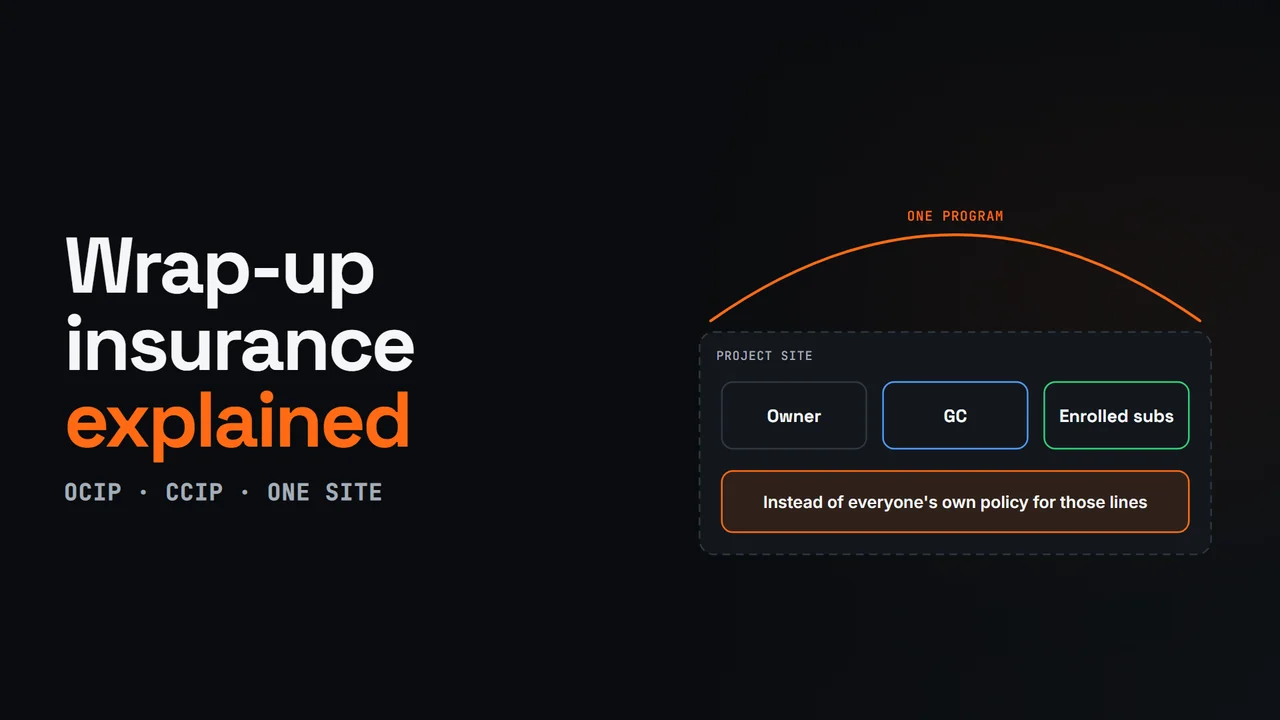
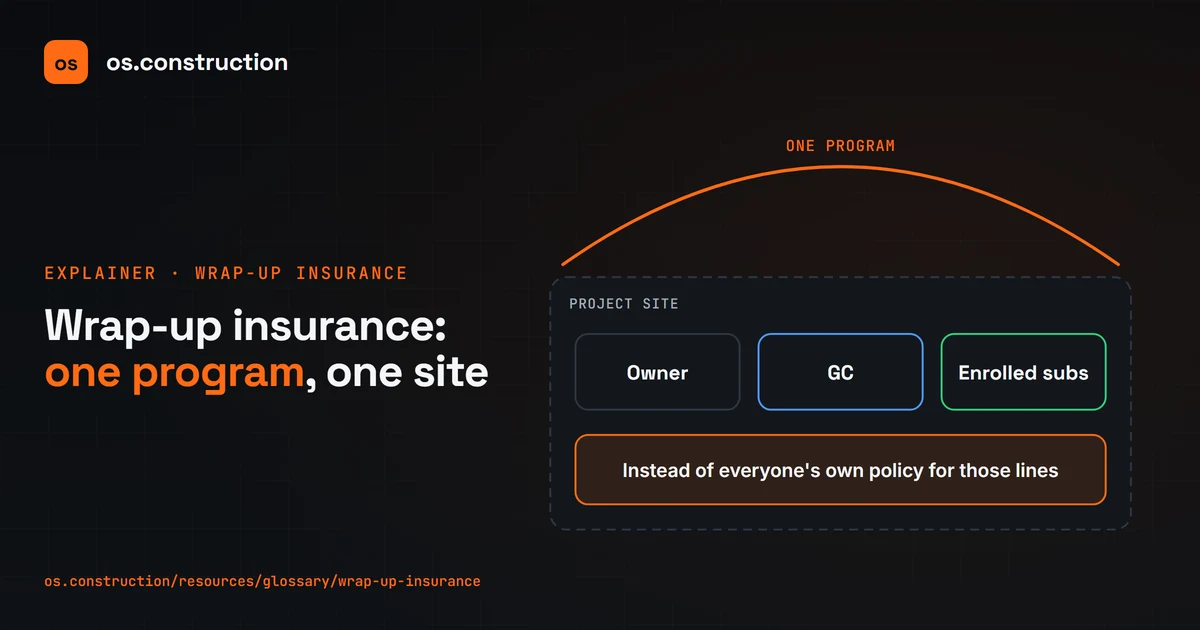
Wrap-up insurance is a single insurance program that covers the owner, the general contractor and enrolled subcontractors for work at one project site. Instead of every company bringing its own policy for those lines, one sponsor buys the coverage for everyone working there.
The difference is who buys it. In an owner-controlled insurance program, or OCIP, the owner purchases the coverage, runs enrollment and keeps any savings or losses. In a contractor-controlled program, or CCIP, the general contractor does, often across several of its projects. For enrolled parties, the coverage looks much the same.
The core lines are usually commercial general liability, workers' compensation and excess liability. Some programs add builder's risk or pollution coverage. Completed operations coverage, for defect claims that show up after turnover, usually continues for a period stated in the policy, so check how long it runs.
Wrap-ups are tied to the project site. Off-site work and fabrication typically isn't covered, and neither is automobile liability. Suppliers and haulers who don't work on site often can't enroll, and some programs exclude hazardous trades. Those parties and lines still need their own insurance, with certificates on file.
Because the sponsor is buying the coverage, enrolled bidders are asked to remove the cost of the covered lines from their price, often on an insurance cost worksheet. If a sub leaves that cost in, the owner pays for the same insurance twice, and the bids can't be compared fairly.
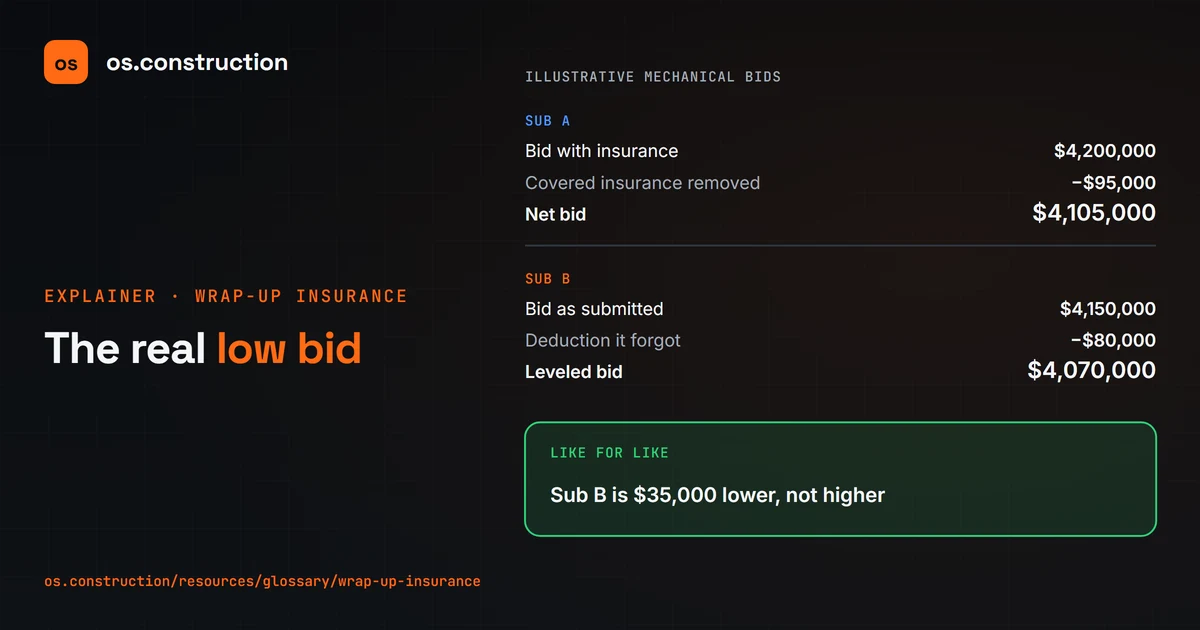
Here's an illustrative example. A mechanical sub bids four million two hundred thousand dollars, including about ninety-five thousand of covered insurance cost, so its net bid is four million one hundred five thousand. A competitor bids four million one hundred fifty thousand, but forgot its eighty thousand deduction. Leveled like for like, the competitor is really at four million seventy thousand, the lower bid.
Each eligible sub enrolls before it mobilizes and gets a certificate showing the wrap-up coverage. Enrolled contractors report on-site payroll, which drives the workers' comp premium, and follow the project-wide safety program. When a sub's work is done, it's unenrolled, while completed operations coverage carries on.
Before you bid, read the wrap-up manual: covered lines, limits, deductibles, exclusions and enrollment steps. Price your deduction from your real rates and keep the backup. Keep your own auto and off-site coverage. In os.construction, the company insurance register can hold the wrap-up certificate alongside each sub's own policies. General information, not insurance advice.
Your next step
See it on one project record.
Create an account and open the sample project to see contracts, costs, changes and billing on the same record.
Try it in the app