Commissioning (Cx) explained: does it actually work?
What building commissioning verifies, who leads it, the OPR and basis of design, functional testing in every mode, and why a failed test can move occupancy.
Diagrams from this explainer
Chapters
- 0:00 What commissioning is
- 0:21 Who does what
- 0:40 It starts before design
- 1:02 Checklists, startup and balancing
- 1:23 Functional performance testing
- 1:43 Illustrative: one failed test
- 2:13 Turnover and seasonal testing
- 2:29 Planning and tracking it
Video transcript
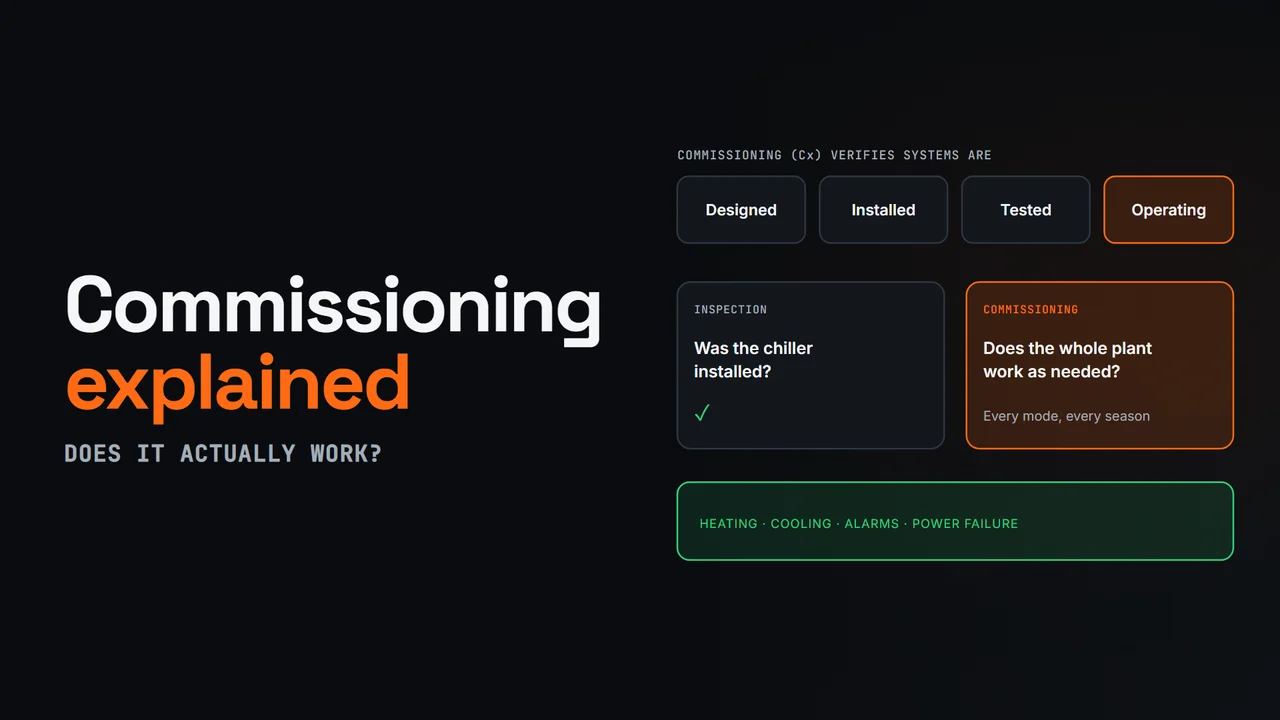
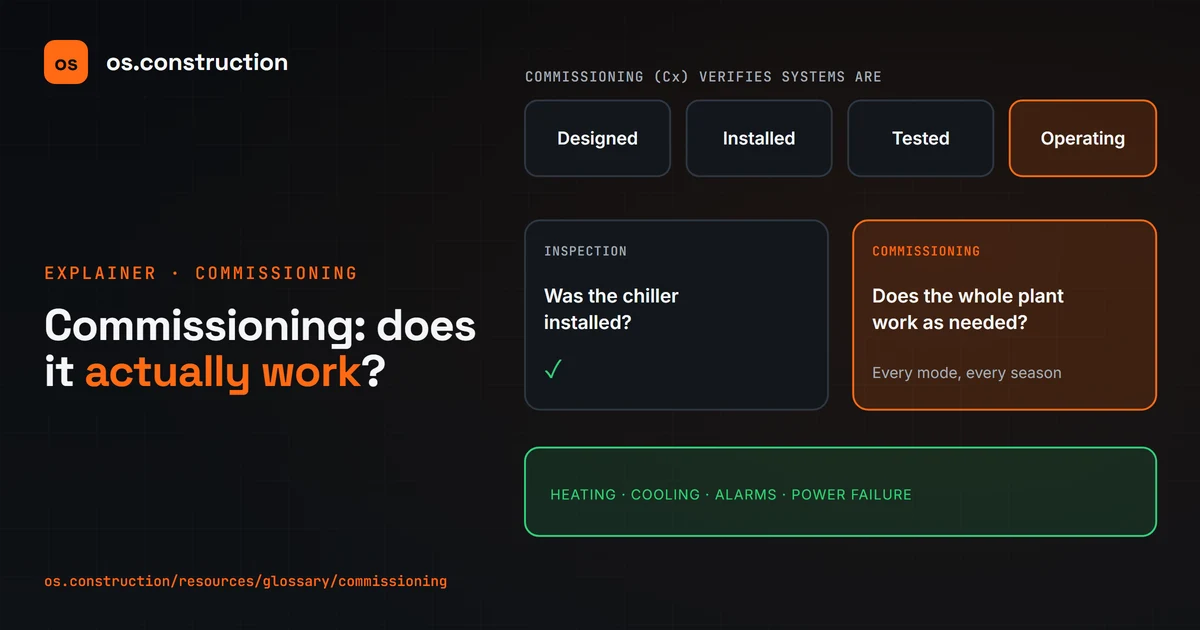
Commissioning is a quality process that verifies a building's systems are designed, installed, tested and operating the way the owner needs. Inspection confirms the chiller was installed. Commissioning confirms the whole plant actually works, in every operating mode, from heating and cooling to alarms and power failures.
The process is led by a commissioning authority, often an independent firm hired directly by the owner. The design team writes the basis of design, the general contractor schedules the work and coordinates the trades, and the trade contractors complete checklists, start up equipment and fix what fails.
Commissioning starts before design. The owner writes the owner's project requirements: what the building must do for occupancy, comfort, energy and maintenance. The design team answers with a basis of design, and the commissioning authority reviews the drawings against those requirements, while problems are still cheap to fix on paper.
During construction, the commissioning authority reviews equipment submittals, and the trades complete construction checklists to confirm each unit is installed correctly. Equipment is started up by the installer or manufacturer. Then testing, adjusting and balancing sets the air and water flows to design values before functional testing begins.
Then comes functional performance testing. Each system is run through its operating modes: occupied and unoccupied, heating and cooling, alarms and failures, and the transfer to emergency power. Anything that fails goes on the issues log, gets fixed, and gets retested until it passes.
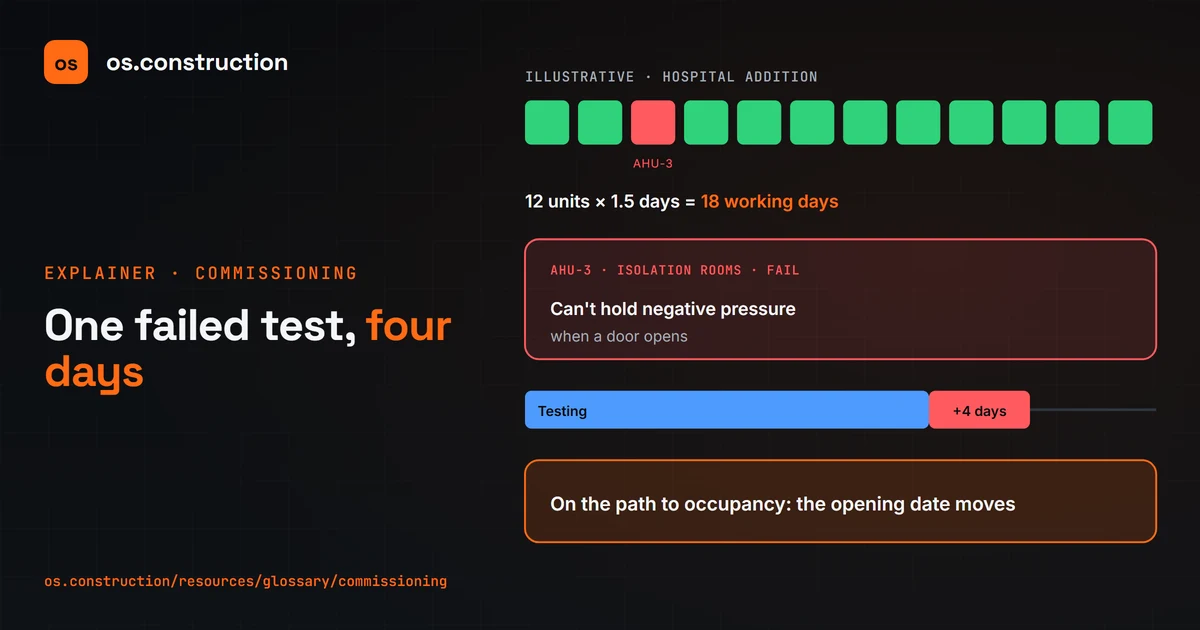
Here's an illustrative example. A hospital addition has twelve air handlers, at about a day and a half of testing each, or eighteen working days. The unit serving the isolation rooms fails, because the rooms can't hold negative pressure when a door opens. The controls contractor retunes the sequence, and the retest passes four working days later. Because those rooms are on the path to occupancy, those days can push the opening date.
At turnover, the owner's operators get training, a systems manual and the commissioning report. But it isn't over. A building finished in winter still needs its cooling tested in summer, and many teams review system performance again before the warranty period ends.
Plan commissioning time in the schedule from the start, and put test attendance in the subcontract scopes. os.construction has no dedicated commissioning module today, but teams can track commissioning deficiencies alongside other closeout items in the Punch List tool, each with a location, photos, assignees and a review-and-close step.
Your next step
See it on one project record.
Create an account and open the sample project to see contracts, costs, changes and billing on the same record.
Try it in the app